There is a quiet but persistent category of parental worry that does not get as much attention as screen time or social media — the people a child talks to by phone. Who is calling them? Who are they calling back? Why does that same unfamiliar number appear in the call log three times this week, with calls lasting twenty minutes each?
For most of history, these questions were unanswerable without either physically holding the child’s phone and scrolling through it, or asking the child directly and hoping for a complete and honest answer. Neither approach is particularly reliable. Children can clear call histories. They can also, under the right circumstances, be significantly less than forthcoming about their telephone social lives.
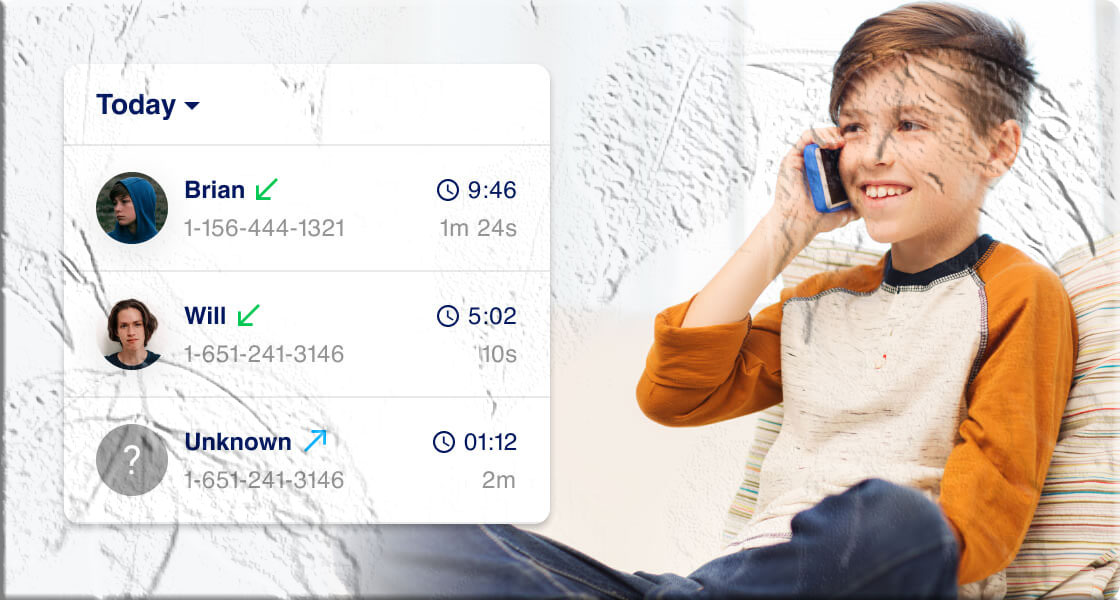
Phone call monitoring changes this equation. MyParental’s Phone Call Tracker gives parents access to a detailed, organized log of all incoming and outgoing calls on their child’s device — who called, who they called, when each call happened, how long it lasted, and whether it connected or was missed — all visible from a remote dashboard that the parent can access from their own phone or any browser.
This guide covers everything parents need to know about call monitoring: why it matters alongside other forms of digital parenting, what the MyParental call log actually shows, how to read that data meaningfully, what warning signs look like, how to set the feature up, and how to use it in a way that genuinely serves the child’s safety.
1. Why Phone Calls Still Matter in the Age of Messaging Apps
It is easy to assume that voice calls have become an obsolete concern for parents monitoring their children’s communication — that everything significant now happens through text messages, social media DMs, and messaging apps, leaving phone calls as an afterthought.
The reality is more nuanced. While texting and app-based messaging have certainly taken over a large portion of the communication that previous generations conducted by voice, phone calls retain a specific significance that text cannot replicate. And the contexts where calls remain most significant are precisely the ones that parents most need to be aware of.
Voice Calls Carry a Different Kind of Intimacy
Text messages are asynchronous, easily forwarded, screenshotted, and shared. Voice calls are real-time, private, and ephemeral in a different way from Snapchat’s disappearing messages — there is no record of what was said unless someone is actively recording. This privacy makes voice calls the preferred medium for conversations that are meant to be particularly intimate, particularly secret, or particularly consequential.
A child who uses text for casual social coordination may use voice calls for the conversations they consider more significant — or more private. The telephone relationship that receives the most call volume and the longest durations in a child’s call history often carries more weight than any messaging thread.
The Gap That App-Based Call Monitoring Does Not Fill
An important technical distinction that many parents miss: apps like WhatsApp, FaceTime, and Discord support voice calls over the internet. These calls do not appear in the device’s native call log — they are routed through the app’s infrastructure rather than the cellular carrier. A child who conducts all meaningful voice communication through internet-based app calls would leave a near-empty cellular call log.
This means call log monitoring and app-based call monitoring serve different — and complementary — purposes. MyParental’s call tracker monitors cellular calls through the native phone function. MyParental’s broader platform, including WhatsApp call monitoring, covers the app-based voice communication that does not appear in the cellular log.
For a complete picture of a child’s voice communication, both are relevant. Neither alone is sufficient.
When Voice Calls Are Used to Circumvent Detection
There is also a specific behavioral pattern worth noting: children who are aware that messaging is monitored sometimes shift to voice calls precisely because they understand that calls leave a less detailed evidentiary record than messages. The call log shows who was called and for how long — but not what was said. A child who wants to communicate something without leaving a readable text trail may do so by voice.
This awareness is another reason that call log monitoring, even without call recording, provides useful safety information. A pattern of long voice calls to an unfamiliar number at unusual hours — even without call content — is a meaningful signal worth investigating.
2. What Call Log Monitoring Provides — And What It Does Not
Setting accurate expectations about what call log monitoring can and cannot tell a parent is essential for using it effectively.
What the Call Log Shows
Call log monitoring captures the metadata of phone calls on the child’s device:
- Who was involved — the contact name (if saved) or raw phone number for each call
- Direction — whether each call was incoming (someone called the child) or outgoing (the child called someone)
- Status — whether the call connected or was missed/declined
- Date and time — when the call occurred
- Duration — how long the call lasted
This metadata provides a detailed picture of the child’s phone communication patterns without requiring the parent to listen to any call content.
What the Call Log Does Not Show
Call content. The words exchanged in a phone conversation are not captured by call log monitoring. What was said, what was discussed, what was agreed to — none of this appears in the call metadata. To access call audio, a separate call recording feature would be required, which carries its own significant legal and ethical considerations.
App-based call activity. Voice calls made through WhatsApp, FaceTime, Skype, Discord, and other internet-based calling services do not appear in the native call log. These are a separate category requiring app-specific monitoring.
The identity behind unfamiliar numbers. A phone number in the call log identifies a cellular line, not necessarily the person using it. An unfamiliar number could belong to a schoolmate whose number the child has not saved, to a friend’s parent’s phone, or to someone entirely unknown. The call log is a starting point for inquiry, not a definitive identification.
3. The Specific Safety Concerns Call Monitoring Addresses
Parents seeking call monitoring capability are typically driven by a consistent set of underlying concerns. Understanding these helps frame the appropriate and proportionate use of the feature.
Unknown Contacts Making Regular Contact
A phone number that appears in the child’s call history and is not saved in their contacts — particularly one that calls repeatedly or generates long call durations — is one of the most practically useful signals that call monitoring surfaces. Parents who see unfamiliar numbers in their child’s call log have a concrete starting point for investigation rather than a general anxiety about who the child might be talking to.
Reverse phone lookup services — including a basic Google search of the phone number — frequently surface carrier information, business listings, or user reports that help identify what a number is associated with. A number that appears in multiple online reports as associated with harassment, or that belongs to a business the child has no known connection to, warrants a direct conversation with the child.
Predatory Adult Contact
The National Center for Missing and Exploited Children documents ongoing cases in which adults establish contact with minors through multiple channels, including direct phone calls. A contact that began through social media or a gaming platform may escalate to phone calls as the relationship develops. The appearance of an unknown adult number in a child’s call log with increasing frequency and duration is a recognizable pattern worth taking seriously.
Phone-Based Harassment
Repeated calls from specific numbers — particularly calls that are brief or that the child consistently declines — can indicate telephone harassment. The Cyberbullying Research Center identifies phone-based harassment as one of the harder-to-detect forms of bullying precisely because it leaves no text record and children are often too embarrassed or afraid to disclose it.
A call log that shows the same number calling five times in a single evening, or a pattern of calls that cluster at specific times when the child is visibly anxious about their phone, is data that a parent might never have otherwise.
Contact with Adults in Inappropriate Contexts
Beyond predatory contact specifically, call monitoring helps parents notice when their child is in regular telephone communication with adults they did not know about. Adults who are contacting a child in contexts the parent has not established or approved — whether that is a much-older romantic interest, an adult peer group the child has been concealing, or any other context — are visible in the call log through the pattern of contact even when the parent does not know whose number it is.
4. MyParental Phone Call Tracker: Feature Overview
MyParental’s Phone Call Tracker is a component of the MyParental parental control platform, available free for Android and iOS. The call monitoring feature set provides:
Incoming call log — all calls received on the child’s device, with caller number or contact name, date and time, duration, and accepted/missed status.
Outgoing call log — all calls placed from the child’s device, with recipient number or contact name, date and time, and duration.
Chronological call history — all calls organized by date and time in a searchable, reviewable log that gives the parent a running timeline of phone activity.
Most frequent contacts view — a summary of the ten contacts the child communicates with most frequently by phone, providing a quick overview of the core call relationships on the device.
Full contact detail — where a number is saved in the device’s contacts, the associated name and other contact information appears in the log entry.
All monitoring data is accessible through the MyParental parent dashboard — from the parent mobile app (available on the Android) or through any web browser at the MyParental website, from anywhere with an internet connection.
5. Understanding the Call Log: What Each Entry Shows
When a parent opens the call monitoring section of the MyParental dashboard, they see a chronological list of call log entries. Understanding what each entry contains — and how to read it — makes the data genuinely useful rather than just a list of numbers.
Contact Name or Number
Each call log entry displays the contact associated with the call. If the number is saved in the child’s device contacts, the saved name appears — making it immediately clear who was on the other end. If the number is not saved, the raw phone number is displayed.
Unknown numbers — those without an associated contact name — are worth noting when they appear in the log. A child who has a regular, meaningful telephone relationship with someone has likely saved that person’s contact. An unknown number that appears repeatedly suggests communication with someone the child either does not want associated with their saved contacts or has not yet gotten around to saving.
Call Direction and Status
Each entry is labeled to show whether the call was:
- Incoming — the other party called the child’s number
- Outgoing — the child called the other party’s number
- Missed — the call came in but was not answered
- Declined — the call was actively rejected
The direction and status combination provides important context. An outgoing call to an unfamiliar number — the child initiated contact — is different from an incoming call from that number. A missed call from an unfamiliar number is different from a declined call from the same number (declining suggests the child knows who is calling). A number that appears in the log exclusively as declined calls is a different concern from one that shows long connected calls.
Timestamp
The date and time of each call is logged with specificity. Reviewing timestamps in the context of the child’s schedule — what they should have been doing at that time, where they should have been, what they said they were doing — adds an important interpretive layer.
A call that occurred during school hours when the child should have been in class. A series of calls between 1am and 3am when the child is supposed to be asleep. A call that happened in the twenty minutes between when the child said they left a friend’s house and when they arrived home. Timestamps convert the raw call log into a narrative that can either confirm or raise questions about what the child has described.
Duration
Call duration is one of the most practically informative data points in the call log. The difference between a thirty-second call and a ninety-minute call involving the same unfamiliar number is enormous. A brief call might be a wrong number, a quick logistical exchange, or an unanswered call that went to voicemail. A multi-hour call to an unknown contact represents a substantial relationship investment that warrants understanding.
Consistently long calls to the same contact — particularly a contact the parent does not know — indicate an ongoing, significant telephone relationship. The duration data quantifies the significance of the relationship in a way that the number of calls alone does not.
6. The Most Frequent Contacts View
Beyond the individual call log, MyParental’s call tracker includes a summarized view of the child’s most frequent call contacts — the ten contacts who appear most often in the call history.
Why This Summary Matters
The raw call log can contain dozens or hundreds of individual entries, making it time-consuming to manually identify which contacts are most prominent. The frequent contacts summary does this aggregation automatically, surfacing the people who feature most significantly in the child’s voice communication without requiring the parent to count and sort manually.
For most children, the frequent contacts list will look entirely expected — close family members, a best friend or two, perhaps a coach or activity coordinator. The value of the view is in noticing when it does not look expected: when an unfamiliar number appears among the most frequent contacts, when a contact that has been discussed has vanished from the list, or when a new contact has suddenly jumped to high frequency.
Using Frequent Contacts as a Regular Check-In
The frequent contacts summary is most useful as a quick periodic check — something the parent reviews weekly or bi-weekly as a high-level scan of the call landscape. If the top ten contacts are all familiar and expected, the parent can note that and move on. If something in the list raises a question, the parent can then look at the detailed call log for that contact specifically.
This tiered approach — frequent contacts summary as a first pass, detailed log review when something warrants it — is more sustainable than comprehensive daily review and still provides meaningful awareness.
7. Distinguishing Incoming, Outgoing, and Missed Calls
The distinction between incoming and outgoing calls — and between connected and missed calls — is worth examining more carefully than it might initially appear.
Incoming Calls: Someone Is Reaching Out
Incoming calls represent contact initiated by the other party. A child receiving regular incoming calls from an unfamiliar number is in a different situation from one who is initiating contact with that number — someone is actively reaching out to the child. This is relevant context, particularly when the frequency or timing of incoming calls is unusual.
High-volume incoming calls from a single unknown number — particularly if those calls arrive at odd hours or if many of them are very brief (suggesting the child is declining them) — is a pattern worth investigating.
Outgoing Calls: The Child Is Initiating Contact
Outgoing calls represent the child actively reaching out to another party. When a child is making outgoing calls to a number that is not saved in their contacts, they are choosing to call someone they have not established as a named contact. This is a specific behavioral choice worth noting when it involves high call frequency or long duration.
A child who does not save a contact may be making a deliberate choice to avoid having that number associated with a name in their phone — because having it named would make it visible and recognizable to anyone who glances at the phone.
Missed Calls: The Data in Absence
Missed calls in the call log tell their own story. A single missed call from an unfamiliar number might be nothing. Fifteen missed calls from the same number over the course of a week, with no corresponding outgoing calls back, suggests the child is avoiding calls from that number — which may indicate harassment, or an uncomfortable relationship the child is trying to avoid.
Alternatively, missed calls from a familiar contact during a period of conflict might reflect the social dynamics of a friendship under strain. The pattern of missed calls often has as much to say as the pattern of connected ones.
8. Timestamps and Durations: Why They Matter
Two of the most informative data points in the call log are also the easiest to overlook: when calls happen and how long they last. Together, they provide a richer picture of the significance of call relationships than call counts alone.
Timing Patterns That Warrant Attention
Late-night calls. Any significant call activity after 10pm for younger children, or after midnight for teenagers who should be sleeping, is worth noting. Late-night calling suggests either that the child is concealing contact they know they should not be having, or that they have a relationship with someone for whom normal daytime calling is not available — both of which are worth understanding better.
School-hours calls. A child’s device showing outgoing calls during school hours — when the phone should be put away — indicates both that the phone is in active use during class and that the child is initiating contact with someone during that time.
Calls immediately before or after behavioral changes. If a child comes home visibly upset on a specific day, reviewing the call log for that afternoon can reveal whether a specific phone call preceded the emotional state. This gives the parent context for a supportive conversation without requiring the child to volunteer the information.
Duration as a Proxy for Relationship Significance
A call that lasts ninety minutes between a child and an unfamiliar number represents a sustained, significant interaction. The two parties know each other well enough and have enough to talk about to hold each other’s attention for an hour and a half. This is not a wrong number or a casual logistical exchange.
Duration data helps parents prioritize which call relationships warrant closer attention. Ten two-minute calls from the same number may be less significant than three forty-five-minute calls from a different number. Duration converts raw call counts into something approximating a measure of relationship investment.
9. Identifying Warning Signs in the Call Log
Parents who know what to look for can use the call log to identify situations that warrant closer attention, even without reading any message content or listening to any calls.
The High-Frequency Unknown Number
A phone number that appears repeatedly in the call log without an associated contact name, particularly when combined with significant call duration, is the single most common warning sign in call monitoring data. It indicates an ongoing telephone relationship with someone the child either has not saved (suggesting the relationship is not something they want formally associated with a name) or cannot save (a number from a platform rather than a personal contact).
Consistent Pattern of Declined Calls from One Number
A number that appears in the call log as declined or missed, repeatedly, across multiple days, suggests the child is actively avoiding calls from that contact. This could indicate harassment from a peer, an adult the child is uncomfortable with, or a situation the child is managing without parental awareness.
Calls at Unexpected Hours to Unknown Contacts
The combination of an unfamiliar contact and an unusual call time — late at night, during school hours, during times the child claimed to be elsewhere — is more significant than either factor alone. The intersection of “who” and “when” creates a context that often warrants a conversation.
A New Contact That Suddenly Dominates the Log
A contact that was not present in the call history one week but appears with high frequency and long duration the next represents a rapid new telephone relationship. Rapid escalation of contact with a new individual — particularly an unknown number — is a recognized pattern in predatory contact situations and warrants parental attention even in the absence of any specific concerning content.
A Previously Regular Contact That Disappears
The absence of a contact that was previously prominent in the call log can also be informative. A child who was in regular call contact with a best friend who suddenly disappears from the log — not through a gradual reduction but abruptly — may be navigating a significant social rupture that is affecting them in ways the parent has not been told about.
10. Call Monitoring and Phone-Based Harassment
Phone-based harassment is one of the forms of cyberbullying that parents find most difficult to detect, and the call log is one of the few tools that can surface it.
How Telephone Harassment Works
Unlike message-based bullying, which leaves a text record, telephone harassment leaves only the metadata record of calls — who called, how many times, for how long, whether the call connected. Harassing calls can take many forms: repeated calls from specific numbers intended to intimidate through the sheer volume of contact, brief calls that disconnect when answered, calls made in rapid succession during a specific time window, or calls that occur at times specifically chosen to maximize disruption (waking the child at night, calling during tests or important events).
Children who are being harassed by phone rarely tell their parents. The embarrassment of being targeted, the fear that parental intervention will make things worse, and the social complexity of involving adults in what children perceive as peer conflict all create barriers to disclosure. The call log provides an independent means of detection.
What Harassment Looks Like in the Call Log
A pattern of telephone harassment typically appears in the call log as:
- Multiple calls from one or more specific numbers within a short time window (several calls in one evening, for example)
- A high ratio of missed or declined calls to connected calls from the same numbers
- Call timing that clusters around specific vulnerable periods — after school, late at night, during weekend evenings
- Rapidly escalating call frequency from a number that recently appeared in the log
When any of these patterns appear alongside behavioral changes in the child — increased anxiety about their phone, visible stress when the phone rings, withdrawal from activities — the combination is a clear signal that warrants a supportive, non-confrontational parental response.
The Cyberbullying Research Center emphasizes that children experiencing harassment need their parents to respond with support rather than judgment, and that the first response to disclosed or detected bullying should be to ensure the child feels heard and helped rather than in trouble. Call monitoring provides the awareness that makes a timely, appropriate response possible; the quality of that response depends on the parent’s approach.
11. Call Monitoring for Teenagers: A Specific Context
Teenagers present a specific context for call monitoring that is different from monitoring younger children — both because of their more complex social lives and because of their growing and legitimate privacy interests.
Why Teenagers’ Call Logs Are More Significant
As children enter their teenage years, their telephone social worlds expand dramatically. New contacts from school, extracurricular activities, social platforms, and emerging romantic interests all appear in the call log. The range of relationship types represented in a teenager’s call history — friends, acquaintances, adults in activity contexts, potential romantic interests, and potentially concerning contacts — is significantly broader than for younger children.
This complexity makes call log review both more informative and more important for teenagers — but also requires more nuance in how the parent uses and responds to what they find.
The Unknown Contact Problem for Teenagers
Teenagers are particularly likely to have phone contact with people their parents do not know. A teenager who meets someone through a social platform, a gaming context, or a mutual friend’s social circle may start calling that person before the parent has any awareness of the relationship’s existence.
Most of these unknown contacts are exactly what they appear to be — peers making normal adolescent social connections. But the call log’s ability to surface unfamiliar numbers with high contact frequency and duration gives parents the awareness to ask questions rather than remain entirely in the dark about who their teenager is in regular telephone contact with.
Proportionate Monitoring for Teenagers
The appropriate response to a teenager’s call log is different from the response to a younger child’s. For a twelve-year-old, a parent might review the full call log regularly and feel comfortable discussing what they see directly. For a sixteen-year-old who has demonstrated judgment over several years, the more proportionate approach is the frequent contacts summary as a periodic check, with detailed review reserved for specific situations that raise concern.
The goal for teenagers is maintaining enough awareness to notice genuine warning signs while preserving the autonomy and trust that healthy adolescent development requires. Call monitoring used proportionately can support this balance; call monitoring used without calibration to the child’s age and demonstrated judgment can undermine it.
12. Combining Call Monitoring with MyParental’s Other Features
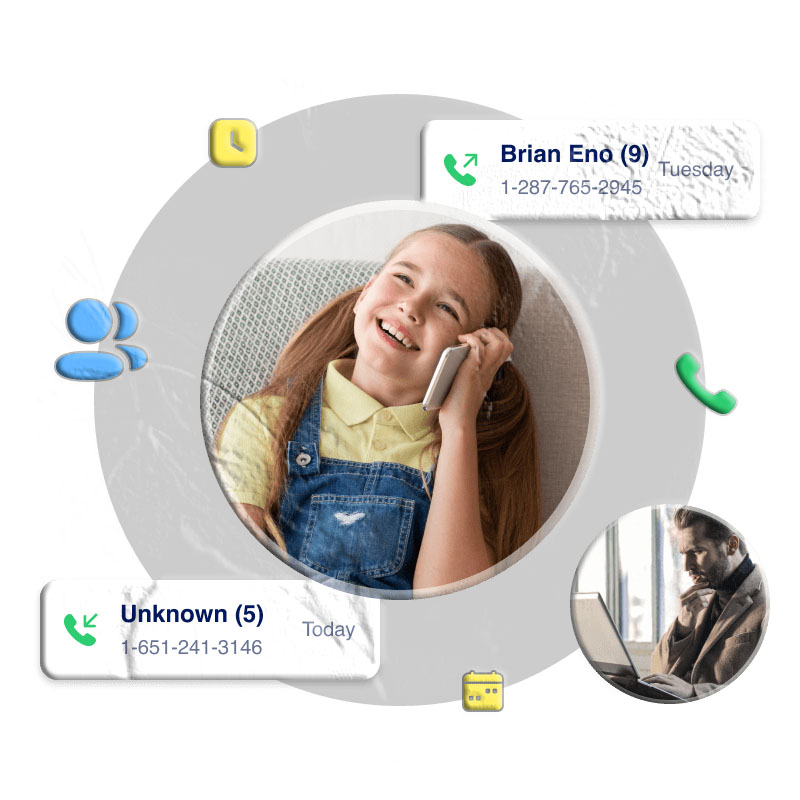
Phone call monitoring is most powerful when used as part of MyParental’s integrated monitoring approach, where multiple data sources provide context for each other.
Call Log + SMS and Messaging Monitoring
A contact that appears in the call log often also appears in the text and messaging log — and vice versa. Reviewing both together gives a much more complete picture of a specific relationship than either alone. A contact who calls regularly but whose name appears nowhere in the message log might be using voice specifically to avoid leaving a text record. A contact who messages frequently but never calls is a different relationship profile. MyParental’s SMS and messaging app monitoring covers standard text messages as well as WhatsApp, Snapchat, Instagram Direct, and other platforms, providing the messaging context that complements the call log.
Call Log + WhatsApp Call Monitoring
As noted earlier, WhatsApp voice and video calls do not appear in the native cellular call log — they are internet-based and routed through WhatsApp’s infrastructure. MyParental’s WhatsApp monitoring captures WhatsApp call logs separately, including the contact, date, time, and duration of WhatsApp calls. A parent who reviews both the cellular call log and the WhatsApp call log gets a comprehensive picture of the child’s voice communication — not just the portion that happens through the cellular carrier.
Call Log + GPS Location Tracking
Correlating call activity with location data adds a geographic dimension to call pattern analysis. A series of calls that occurred while the child was at a location the parent does not recognize — visible through MyParental’s location tracking — adds context to the call relationship. Similarly, if a child says they were somewhere specific during a period when calls were made, location history either confirms or raises a question about that account.
Call Log + Activity Reports
MyParental generates automated daily and weekly activity reports that summarize activity across all monitored features, including call activity. These reports give parents a periodic high-level view without requiring daily manual review of the call log. When the weekly report surfaces a notable call pattern — a new unknown number appearing multiple times, a sharp increase in total call duration — the parent can then review the detailed call log for the relevant period.
13. How MyParental’s Call Tracker Works Technically
Understanding the technical basis of call log monitoring helps parents set accurate expectations.
Accessing the Native Call Log
Every smartphone maintains a call log — a record of recent calls — in its operating system. This is the same data visible when a user opens the phone app and taps the recent calls section. On Android devices, this call log is stored in a database that applications with the appropriate READ_CALL_LOG permission can access.
MyParental, once installed on the child’s Android device with this permission granted during setup, reads from the native call log database and syncs that data to the parent dashboard at regular intervals. The call log data includes the information described throughout this guide: contact name or number, direction, status, date, time, and duration.
iOS Considerations
Apple’s iOS platform imposes stricter controls on what third-party applications can access. The READ_CALL_LOG permission that enables comprehensive call log access on Android does not have a direct equivalent in iOS’s permission framework. The depth of call monitoring available on iOS may therefore be more limited than on Android.
Parents using MyParental on iOS child devices should review current feature availability in MyParental’s documentation to understand what specifically is available on that platform. The core monitoring capabilities are supported, but iOS-specific limitations in the depth of call log access may apply.
Sync Frequency
Call log data syncs from the child’s device to the parent dashboard at regular intervals, provided the child’s device has an active internet connection. If the device is temporarily offline, call log data accumulated during the offline period will sync when connectivity is restored. The dashboard timestamps each entry with when the call actually occurred on the device, not when it was synced, so the historical record is accurate even when syncing is slightly delayed.
What Happens When Calls Are Deleted
On Android, calls that the child manually deletes from the device’s call log before MyParental syncs them may not appear in the monitoring dashboard. Regular sync intervals reduce this gap, but a child who is systematically clearing specific calls immediately after they occur can reduce what is captured. This is a limitation of call log monitoring generally, not specific to MyParental.
14. How to Set Up MyParental Phone Call Tracker
MyParental’s call monitoring is part of the broader MyParental installation — no separate setup is required for call tracking specifically.
Step 1 — Install MyParental on Your Own Device
Download and install the MyParental parent app. If you prefer to monitor from a computer, the complete parent dashboard including call monitoring is accessible from any browser at the MyParental website without installing the app on your own device.
Step 2 — Create a Free MyParental Account
Open MyParental or navigate to the MyParental website and register a free account using your email address. Sign in to access the parent dashboard. Use a strong, unique password and an email address the child does not have access to.
Step 3 — Install MyParental on the Child’s Device
This step requires brief physical access to the child’s phone or tablet.
During setup on the child’s device, grant the required permissions when prompted. For call monitoring specifically, the critical Android permission is READ_CALL_LOG — when prompted to allow MyParental access to call log data, grant this permission. Without it, call monitoring will not function.
Follow the complete setup sequence. Tap Hide and continue when prompted to reduce the app’s visibility on the child’s device. Configure the keep-alive settings as directed — this ensures MyParental’s background service continues running, which is necessary for consistent data syncing including call log updates.
Step 4 — Pair the Devices
In the parent dashboard, generate a QR code or text binding code. On the child’s device, open MyParental and enter the code or scan the QR code to establish the connection. Once paired, the child’s call log data begins syncing to the parent dashboard.
Step 5 — Navigate to Call Monitoring
In the MyParental parent dashboard, find the calls or call log section. Incoming and outgoing call history from the child’s device will appear as it is synced. Review the chronological log, check the most frequent contacts summary, and set up any relevant alerts from within this section.
15. The Legal Framework for Call Log Monitoring
Call log monitoring — accessing the metadata of phone calls made and received on a child’s device — sits within a legal framework that parents should understand.
Parental Authority Over Minor Children’s Devices
In most jurisdictions, parents have broad legal authority to monitor their minor children’s device activity, including reviewing call logs, on devices the parent owns and provides. This authority is grounded in parents’ legal responsibility for their children’s safety and wellbeing and is generally treated as unambiguous parental oversight rather than unlawful surveillance.
The Electronic Communications Privacy Act (ECPA) in the United States addresses the interception of electronic communications. Reviewing stored call log metadata — who called, when, how long — is generally treated differently from intercepting the content of live communications, and parental review of a minor’s stored call log on a device the parent owns is within the scope of lawful parental oversight in most legal analyses.
The Distinction Between Metadata and Content
Call log monitoring captures metadata — information about calls — not the content of calls. This distinction matters legally and ethically. Accessing stored call metadata is treated quite differently from intercepting live call audio or recording phone conversations. The latter carries significant legal requirements around recording consent that vary dramatically by jurisdiction. Call log monitoring — which captures only the fact that a call occurred, not what was said — is a substantially less legally sensitive activity.
For parents considering enabling call recording (a separate feature from call log monitoring), recording consent laws must be carefully reviewed. Many US states require all parties to consent to being recorded, and many other countries have equivalent requirements. Call log monitoring, by contrast, involves no audio recording and is accordingly treated more permissively in most legal frameworks.
International Variation
Legal frameworks for parental monitoring and data privacy vary across countries. The General Data Protection Regulation (GDPR) in the European Union, the UK GDPR post-Brexit, and comparable frameworks in Canada, Australia, India, and other jurisdictions each establish their own rules. Parents outside the United States should verify the applicable framework in their specific jurisdiction, particularly for any features that go beyond call log review into recording or interception.
The Age of Majority
The broad parental authority applicable to monitoring minor children changes completely when the child reaches the age of majority. At 18 (in most jurisdictions), the young adult has the full privacy rights of any adult, and accessing their call log without their knowledge and consent is treated as unauthorized access in most legal frameworks regardless of the family relationship.
16. Privacy, Trust, and the Responsible Use of Call Monitoring
The technical and legal permissibility of call log monitoring does not resolve the ethical question of how to use it responsibly — in a way that genuinely serves the child’s safety while preserving the trust and relationship that families need.
Transparency as the Better Default
The consistent recommendation from digital parenting researchers and the American Academy of Pediatrics is that parental monitoring conducted with the child’s knowledge — where the child understands that their call activity is visible to the parent — produces better outcomes than covert monitoring. The reasons are both relational and practical.
Relationally, transparent monitoring avoids the serious trust damage that occurs when covert monitoring is discovered — which tends to happen more often than parents expect. A child who discovers they have been monitored secretly experiences it as a betrayal that can significantly damage the parent-child relationship.
Practically, a child who knows their call log is visible to the parent is more likely to think twice before calling a contact they would not want the parent to know about. The accountability effect of transparent monitoring is itself a protective outcome.
What to Do When the Log Raises Questions
When the call log surfaces something that concerns the parent — an unfamiliar number with high contact frequency, calls at unusual hours, a pattern that does not match what the child has described — the question of how to respond matters enormously.
The instinct to confront directly — “I’ve been monitoring your calls and I see you’ve been calling this number” — is understandable but often counterproductive. It shifts the conversation from the actual concern to the monitoring itself, triggers defensiveness, and closes off the dialogue the parent was trying to open.
A more effective approach uses the call log data to inform the parent’s understanding, which then shapes a more open-ended conversation: “I’ve noticed you seem stressed lately — is anything going on with your friendships?” or “I wanted to check in about who you’ve been spending time with.” This approach may not surface every concern directly, but it creates the kind of conversational opening that allows a child to share what they are comfortable sharing, and gives the parent context to ask follow-up questions.
For serious safety concerns — evidence of harassment, contact with an unknown adult that has escalated rapidly, patterns that suggest something genuinely worrying — more direct parental action is appropriate. The response should match the severity of the concern.
Calibrating Monitoring to Age and Trust
The frequency and depth of call log review that is appropriate for a ten-year-old is different from what makes sense for a sixteen-year-old with a track record of responsible behavior. Call monitoring used proportionately — lighter touch for older children who have earned trust, more comprehensive for younger children or in situations of specific concern — is more likely to produce the safety outcomes parents want while preserving the relationship that makes those safety outcomes possible.
Frequently Asked Questions
What does MyParental’s Phone Call Tracker show me?
MyParental’s Phone Call Tracker shows a chronological log of all incoming and outgoing calls on the child’s device. Each entry includes the caller or recipient’s contact name or phone number, whether the call was incoming or outgoing, the date and time, the duration of the call, and whether the call was connected, missed, or declined. A most frequent contacts summary shows the ten contacts the child communicates with most by phone.
Does MyParental show both incoming and outgoing calls?
Yes. The call log captures both calls the child received and calls the child initiated, clearly distinguished so the parent can see both directions of communication activity for any contact.
Can I see if a call was missed or declined?
Yes. Each call log entry shows the status of the call — whether it connected, was missed (not answered), or was actively declined. This distinction is often informative: a number that repeatedly calls and is consistently declined is a different situation from one that always connects.
Does the call tracker show what was said in a phone call?
No. Call log monitoring captures metadata — who, when, direction, status, and duration — not the audio content of calls. Recording the content of calls is a separate capability with its own significant legal considerations around recording consent laws that vary by jurisdiction.
Does MyParental track WhatsApp calls as well as regular phone calls?
Cellular phone calls are captured in the native call log that MyParental’s call tracker monitors. WhatsApp voice and video calls travel over the internet rather than the cellular carrier and do not appear in the native call log. MyParental’s WhatsApp monitoring feature captures WhatsApp call logs separately. For a complete picture of voice communication, both features are relevant.
How do I set up call tracking with MyParental?
Install MyParental on your own device, create a free account, install MyParental on the child’s device, grant the call log access permission during setup, and pair the devices using the binding code or QR code. Call log data begins syncing to the parent dashboard once pairing is complete.
Does call monitoring work if the child clears their call history?
Calls that the child deletes from the device’s call log before MyParental syncs them may not appear in the monitoring dashboard. Regular sync intervals reduce this gap, but systematic deletion of specific calls immediately after they occur can limit what is captured.
Is it legal to monitor my child’s call log?
In most jurisdictions, parents have broad legal authority to review call logs on devices they own and provide to their minor children. The legal situation changes when the child reaches adulthood and for features that go beyond call log review into call recording, which is subject to varying consent requirements by jurisdiction. If there is uncertainty about the applicable legal framework in your specific location, consulting a qualified attorney is appropriate.
Can the child tell that their calls are being monitored?
MyParental is designed to run in the background without obvious visibility on the child’s device. Whether to tell the child that call activity is monitored is a parenting decision — for the reasons discussed in the ethics section, transparent monitoring generally produces better family outcomes than monitoring the child discovers covertly.
Is MyParental’s Phone Call Tracker free?
Yes. Call log monitoring — including incoming and outgoing call history, timestamps, durations, call status, and the most frequent contacts summary — is part of MyParental’s free platform. Download MyParental and access the full monitoring dashboard from any browser.
Bringing It Together
Phone calls carry a kind of intimacy and permanence in a child’s social life that text messages and social media cannot fully replace — and a kind of privacy that makes them worth monitoring alongside other communication channels. MyParental’s Phone Call Tracker gives parents a detailed, organized view of who is calling their child, who their child is calling, when those calls happen, and how long they last — the metadata that shapes an understanding of the telephone relationships in the child’s life.
Used thoughtfully — with transparent communication where appropriate, calibrated to the child’s age and the specific concerns at hand, and deployed as a piece of a broader monitoring approach that includes messaging, location, and app usage — call monitoring is a genuinely useful tool in the digital parenting toolkit.
MyParental’s call monitoring features are free and accessible through the parent dashboard from any device, at any time.
Download MyParental for Android from the MyParental site. Access the Phone Call Tracker and full monitoring dashboard from any browser at the MyParental website.